
-

Phone: +86-400-678-0576
-

E-mail: Stevenhan@cnbsj.com
-

Fax: +86-576-85726668


 English
 русский
 عربى
 Español
NEWS

How to Choose the Right Kitchen Sink Drain: Materials, Size & Sealing
 2026.11.09
 Industry News
Content
- 1 The Short Answer: Match the Drain to Your Sink, Your Pipework and Your Daily Use
- 2 Check the Sink Outlet Size and Bowl Layout First
- 3 Compare PP and Stainless Steel Materials Before Deciding
- 4 Look at Sealing Design and Odor Control
- 5 Choose Features That Fit Your Cooking Habits
- 6 Verify Quality Testing Before Placing an Order
- 7 Consider Where the Drain Will Be Used
- 8 Work With a Manufacturer That Controls Its Own Production
The Short Answer: Match the Drain to Your Sink, Your Pipework and Your Daily Use
The right kitchen sink drain is the one whose outlet diameter fits your sink cutout, whose material can handle hot water and grease, and whose trap holds a reliable water seal against sewer odor. For most households and rental projects, a polypropylene (PP) drain system rated to 95°C is the practical choice, while stainless steel suits premium kitchens and high-traffic commercial settings. Once those three points are settled, the remaining decisions about basket strainers, overflow ports and trap layout become much easier.
A drain looks like a minor part, yet it sits at the point where hot water, detergent, food scraps and cooking oil all pass every day. A poorly matched unit leaks at the joint, traps smells or clogs within months. The sections below explain how to check each factor before you buy or specify.
Check the Sink Outlet Size and Bowl Layout First
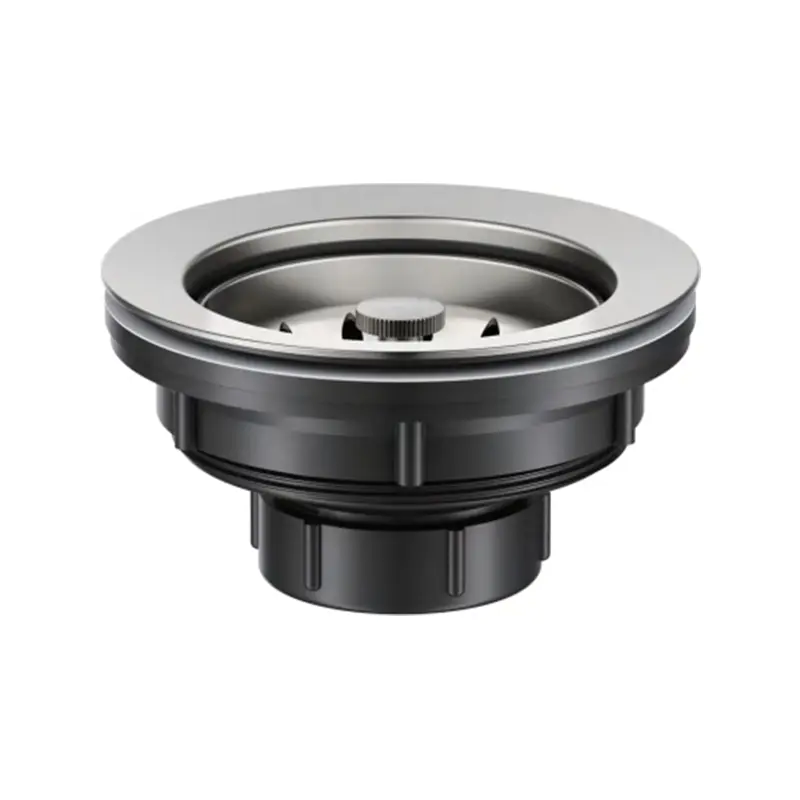
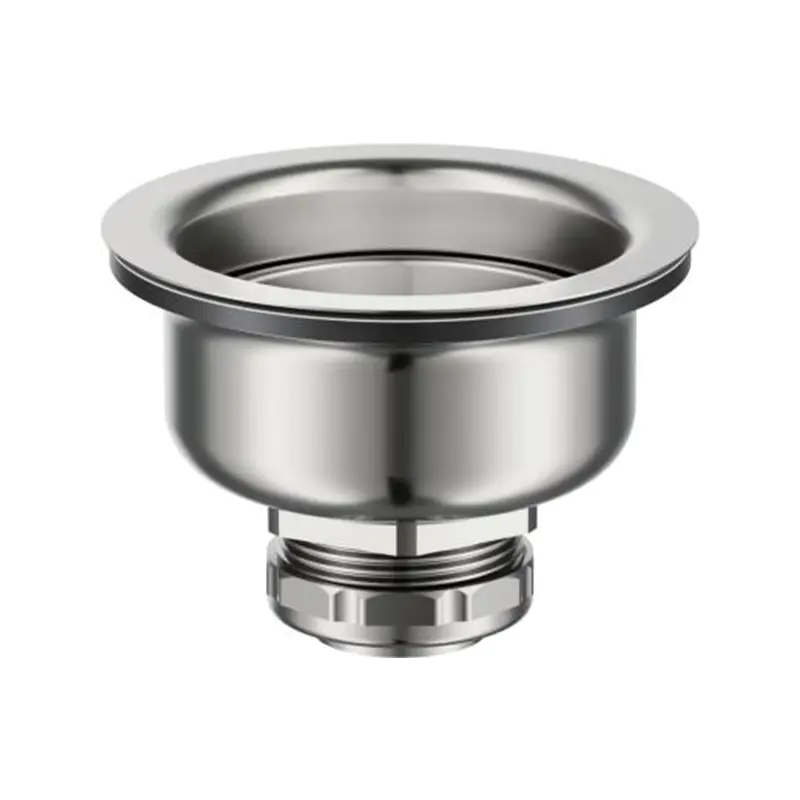
Compatibility starts with the hole in the sink. Most kitchen sinks use a drain opening of roughly 90 mm to 114 mm, and the strainer flange has to sit flat on the sink surface with enough overlap to hold a seal. Measure the cutout diameter, then check the thickness of the sink material, because a thin stainless sink and a thick quartz composite sink need different lock-nut depths.
Single-bowl and double-bowl sinks need different pipework
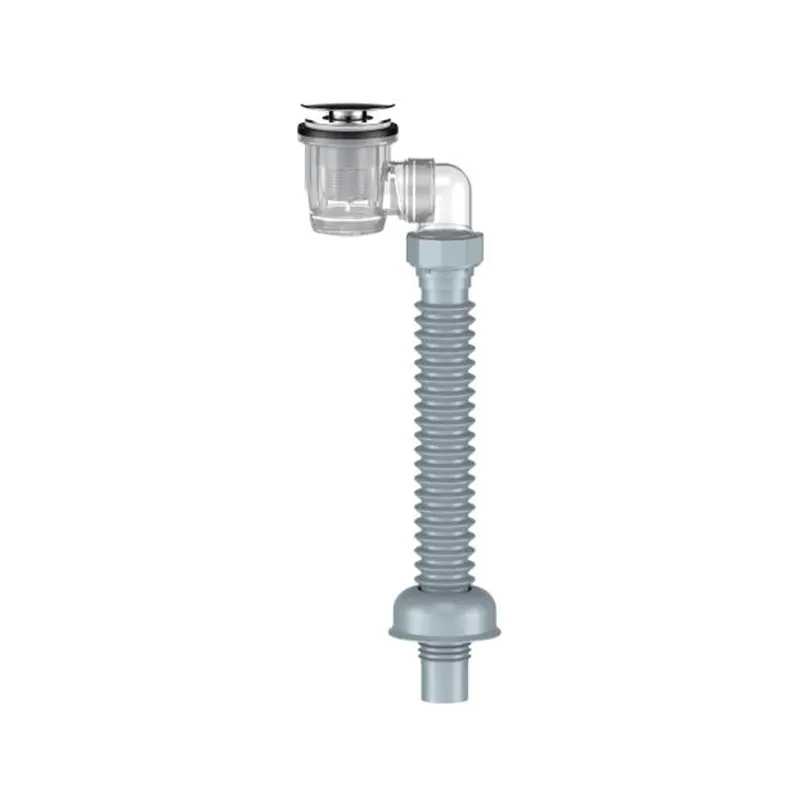
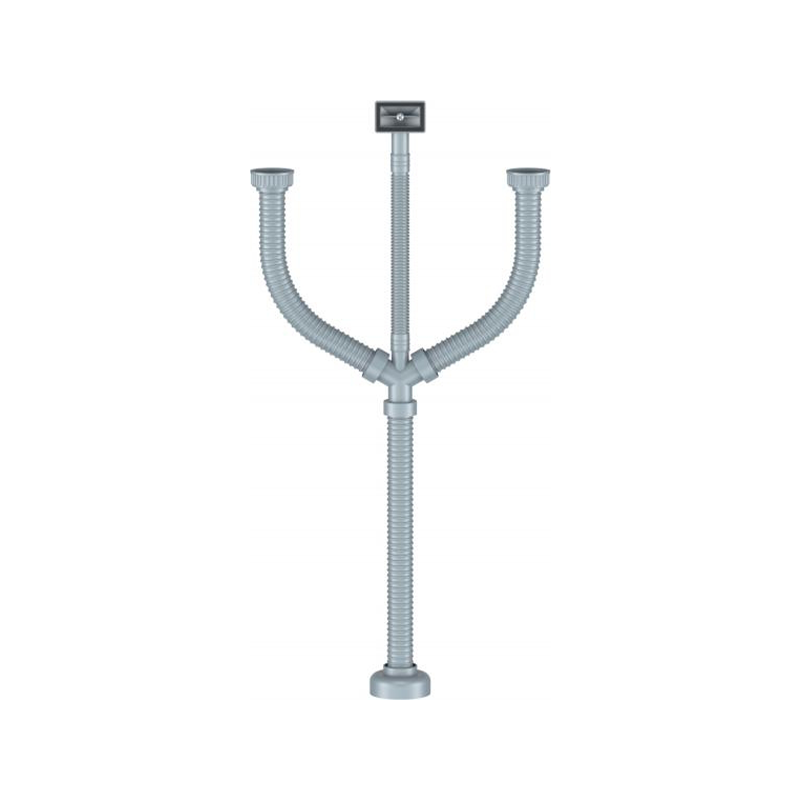
A single bowl usually connects to a straight tube and a trap, which keeps the installation compact. A double bowl needs a Y-shaped or T-shaped connector that merges both outlets into one waste line. When the two bowls are at different depths, an adjustable tailpiece helps avoid a sloped run that holds standing water. If the sink also has a dishwasher or a food waste disposer, a branch inlet on the connector should be planned before purchase, not added later.
Overflow ports affect the fitting you need
Some sinks include an overflow channel that routes excess water into the drain body. In that case, the drain must have a matching overflow connection, otherwise the channel is left open and leaks. Sinks without an overflow are simpler, and a plain basket strainer is enough.
Compare PP and Stainless Steel Materials Before Deciding
Material choice affects service life, appearance and cost more than any other factor. Polypropylene is a lightweight thermoplastic that does not rust, shrugs off most household cleaners and stays stable in contact with cooking oil. High-grade, eco-friendly PP used for injection-molded pipe bodies and fittings tolerates water temperatures up to 95°C, which covers boiling pasta water poured straight into the sink. Because the pipe is molded rather than cut and glued from stock, wall thickness and thread profiles stay consistent from one piece to the next.
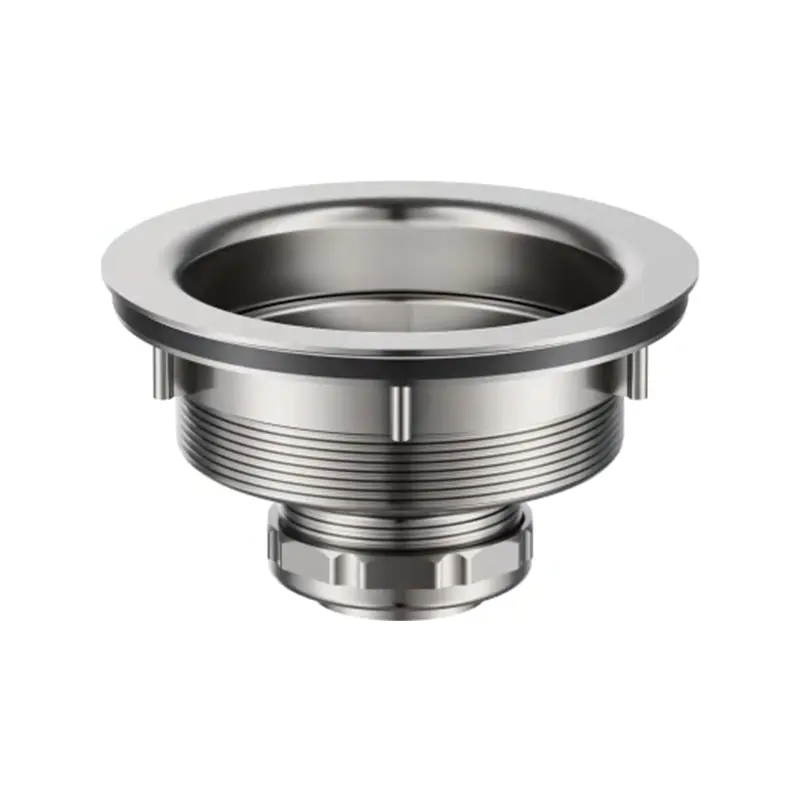
Stainless steel is the better fit when the drain is exposed to view, such as under a glass-top counter, or when the kitchen sees heavy use. Quality units are made by precision welding and polished to a mirror finish, so seams stay tight and the surface resists staining and scratches. The trade-off is a higher unit price and a heavier part that needs firmer support under the sink.
| Criteria | PP (Polypropylene) | Stainless Steel |
|---|---|---|
| Heat resistance | Up to 95°C | Not limited by normal kitchen water |
| Grease and detergent resistance | High | High |
| Appearance | Hidden installations | Mirror-polished, visible installations |
| Weight | Light | Heavier |
| Typical use | Housing projects, rentals, general kitchens | High-end homes, hotels, commercial kitchens |
Look at Sealing Design and Odor Control
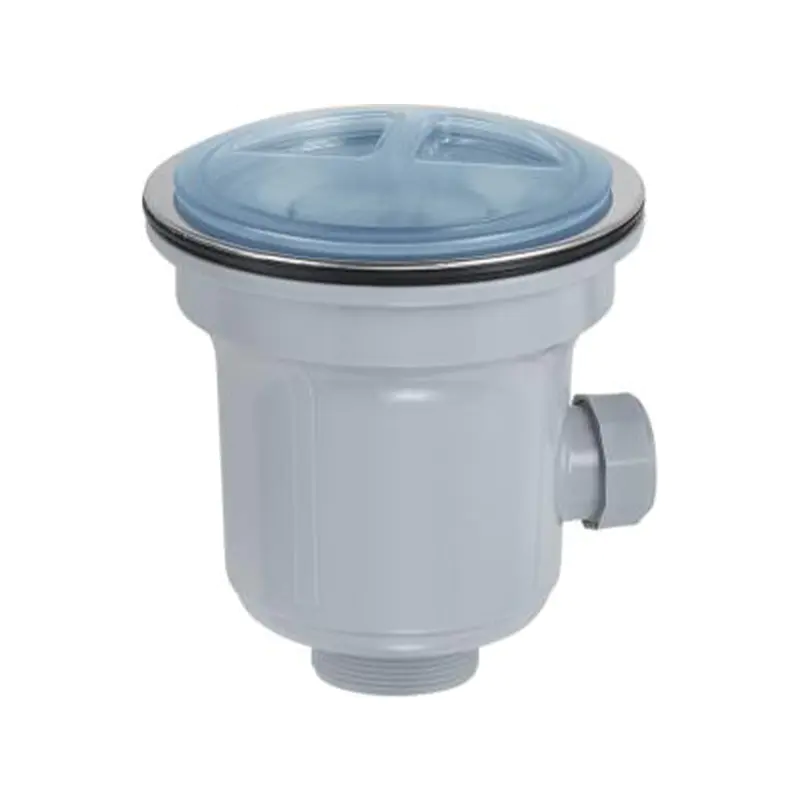
Odor is the complaint buyers hear most after leaks. A trap, usually a U-bend or bottle shape, retains a small volume of water that blocks gas from the sewer line. If the trap is too shallow or the seal dries out, smells rise into the kitchen. A good design keeps a water seal deep enough to hold during normal use, and rubber gaskets at each joint should compress evenly instead of relying on over-tightened nuts.
For apartments and long rental stock, a drain with a built-in anti-odor insert or a one-way seal is worth considering, because sinks in guest rooms or holiday units can sit unused for weeks and allow the trap water to evaporate. Thread quality matters as well. Clean, accurately molded threads let the nut seat without cross-threading, which is one of the commonest reasons a new drain weeps at the first connection.
Choose Features That Fit Your Cooking Habits
A household that fries often sends more grease down the line than one that mostly reheats food, and the drain should reflect that. A removable basket strainer catches vegetable peelings and rice before they enter the pipe, and a deeper basket needs emptying less often. Where a food waste disposer is installed, the flange must be rated for the disposer mount and the tailpiece must be wide enough for ground waste to pass.
Pop-up stoppers are useful when the sink doubles as a washing basin, while a fixed strainer is simpler and has fewer moving parts to fail. In restaurants, canteens and hotel back kitchens, a larger bore and an easy-clean trap save time, since staff can open the trap in seconds and clear a blockage without calling a plumber.
Verify Quality Testing Before Placing an Order
Two drains can look identical on a product page and perform very differently once installed. Ask the supplier what is checked before shipment. Reliable production covers dimensional accuracy inspection so that parts from different batches fit together, pressure leakage testing at 0.3 MPa to confirm that joints and bodies hold under load, high-temperature cycling to expose warping or cracking after repeated hot water use, and odor-seal verification to confirm the trap retains its water barrier.
Automated production lines help here because repeatable molding and welding keep tolerances steady across large orders. For importers and contractors, consistent dimensions matter as much as the material itself, since a batch with small size variation can cause installation delays on site.
Consider Where the Drain Will Be Used
Residential renovation is the most common case, where a PP drain set with a standard strainer and trap gives dependable service at a sensible cost. Developers fitting out hundreds of apartments tend to prefer PP for the same reason, adding the benefit of light packaging and easy handling. Hotels and serviced residences often pair stainless steel strainers with PP pipework, so the visible parts look refined while the concealed run stays economical.
Commercial kitchens place the highest demands on a drain, with frequent hot water, heavy grease and long operating hours. Here, stainless steel components with a generous bore and a serviceable trap usually last longer between maintenance visits. Whatever the setting, confirm the thread type and pipe diameter against local plumbing standards in the destination market, since these differ between regions.
Work With a Manufacturer That Controls Its Own Production
Sourcing directly from a specialist reduces the risk of mismatched parts and unclear specifications. Zhejiang BOSHIJIE Kitchen & Bath Technology Co., Ltd. focuses on stainless steel sink drainers and has developed four product series: drainers, bathroom fittings, floor drains and accessories. The company is based at Taizhou Toumen Port Area in eastern Zhejiang, close to Ningbo and Wenzhou and connected by the Yong-Tai-Wen Expressway and Taizhou Airport, which supports efficient export logistics.
The company employs more than 300 people, including over 50 in management, R&D and marketing, and operates a factory on a 20,000 square meter site with 22,800 square meters of building area. Its approach of improving products through independent research and newly introduced production equipment gives buyers a stable base for custom sizes, mixed-material sets and repeat orders. When requesting a quotation, prepare the sink outlet diameter, preferred material, bowl configuration and target market so the specification can be confirmed in one round.
Recommended News

Be a top expert in underwater engineering, build a renowned international brand, become an outstanding manufacturing enterprise, and strive to be an industry leader at home and abroad.
Contact Information
Add: No. 3 Beiyang 4th Road, Beiyang Industrial Park, Shangpan, Duqiao Town, Linhai City, Zhejiang Province, China
Tel: +86-576-85726188 / +86-400-678-0576
Fax: +86-576-85726668
E-mail: boshijie8885@163.com / Stevenhan@cnbsj.com
Copyright © Zhejiang BOSHIJIE Kitchen & Bath Technology Co., Ltd. All Rights Reserved.
Privacy Custom Washbasin Sink Drainer Factory