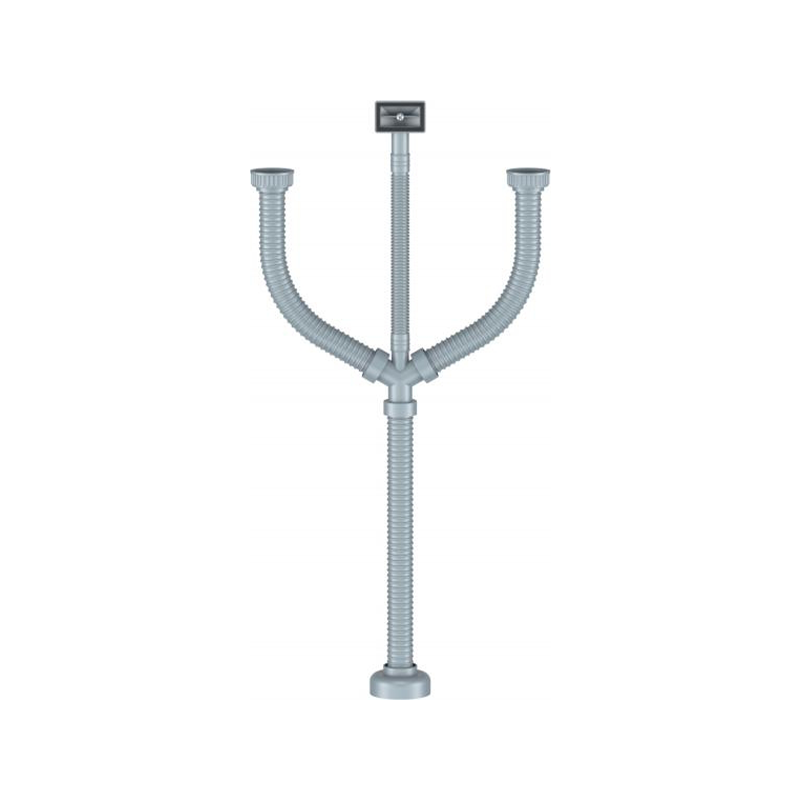
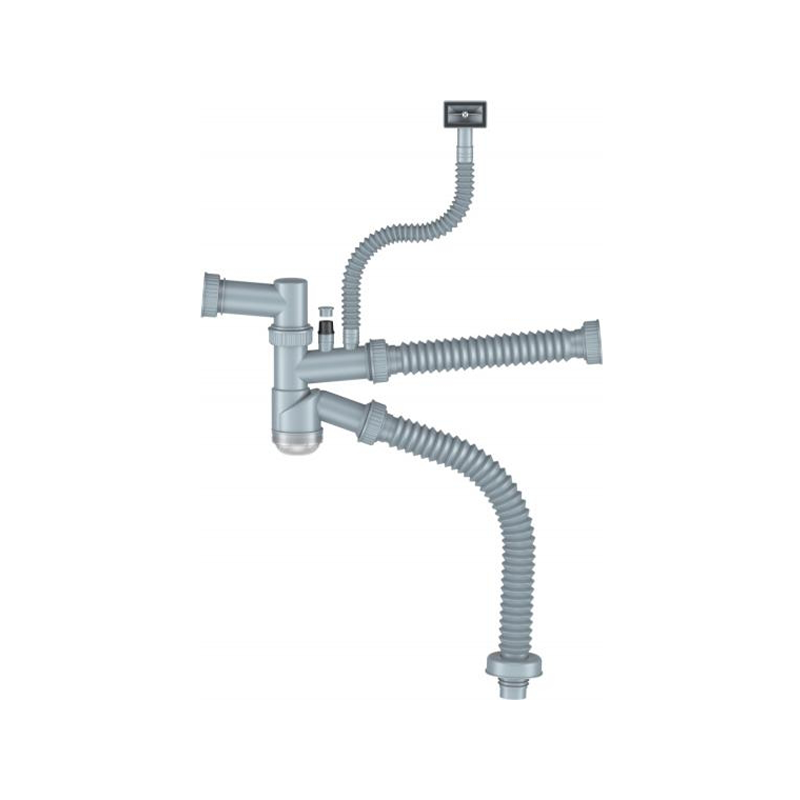
Double bowl sink drains are designed for kitchen sinks divided into two separate basins, requiring a more complex drainage configuration than single bowl systems to manage water flow from both compartments into a single household drain line. This category centers on the connector hardware, crossover piping, and dual-outlet assemblies needed to link two independent drain points into one unified waste line beneath the sink.
Structural Characteristics
Unlike single bowl setups where water flows directly to one drain point, double bowl systems require a connector tee or crossover pipe that merges water discharge from both basins before reaching the P-trap. Each bowl typically retains its own basket strainer and stopper assembly, but the two are joined via a continuous waste tube or elbow fitting, allowing water and waste to combine smoothly without backflow or pooling between the two sides.
Core Components
A complete double bowl drain assembly generally includes two basket strainer units, connector arms or waste tees, extension tubes, slip nuts, and washers to join both sides into a single trap outlet. Some configurations also include a garbage disposal flange on one side, requiring careful alignment so that the disposal unit's outlet integrates properly with the shared drain line without disrupting flow from the second bowl.
Independent Bowl Functionality
A key consideration in this category is ensuring that each bowl can be filled, drained, or stopped independently of the other, since many households use one side for washing and the other for food prep or air-drying. This means stopper mechanisms are typically installed separately on each basket strainer, giving users full control over water retention in either bowl without affecting the other.
Installation Complexity
Compared to single bowl drains, double bowl systems involve a more involved installation process, requiring precise alignment of connector pipes and careful measurement to ensure the crossover tube maintains proper slope for adequate drainage without leaks or clogging at the joint. Kits in this category are often sold as complete sets to simplify sourcing matched components with compatible diameters and fittings.
Material and Durability Considerations
Given the added plumbing complexity, materials commonly include durable ABS or PVC piping for the crossover connectors, paired with stainless steel or brass basket strainers for the primary drain openings. Rubber slip-joint washers are used extensively throughout the assembly to accommodate the multiple connection points while maintaining a leak-free seal.
Applications
This category serves standard residential kitchens with double basin sink configurations, commonly found in family homes where separate compartments are used for washing and rinsing or for accommodating garbage disposal units alongside a secondary prep sink. It is less relevant to smaller kitchens, utility sinks, or commercial prep areas that typically favor single bowl configurations for simplicity.



 English
 русский
 عربى
 Español